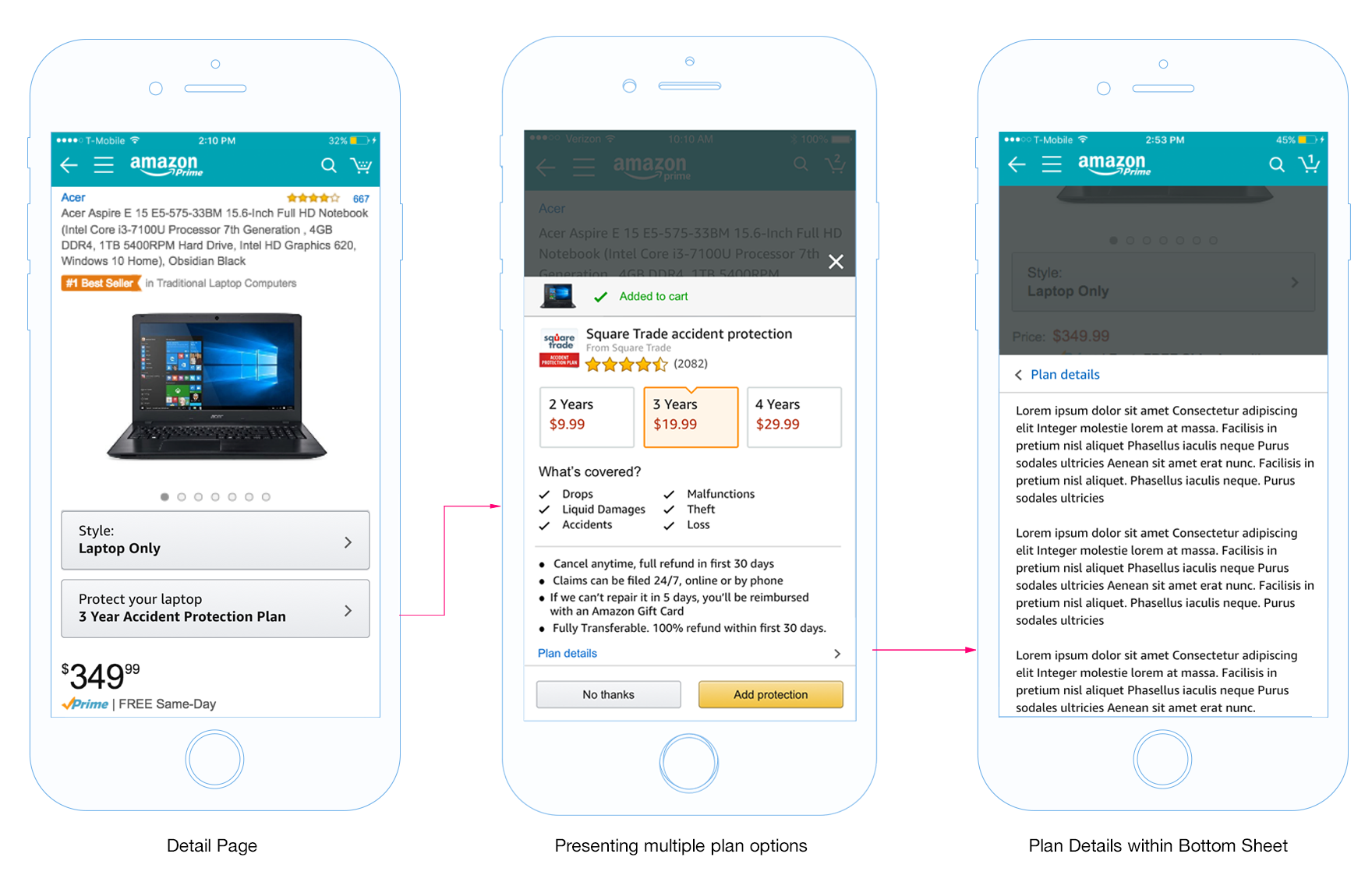

Redesigned the current warranty experience by offering multiple protection plans to customers on the Amazon mobile app.
Project Overview
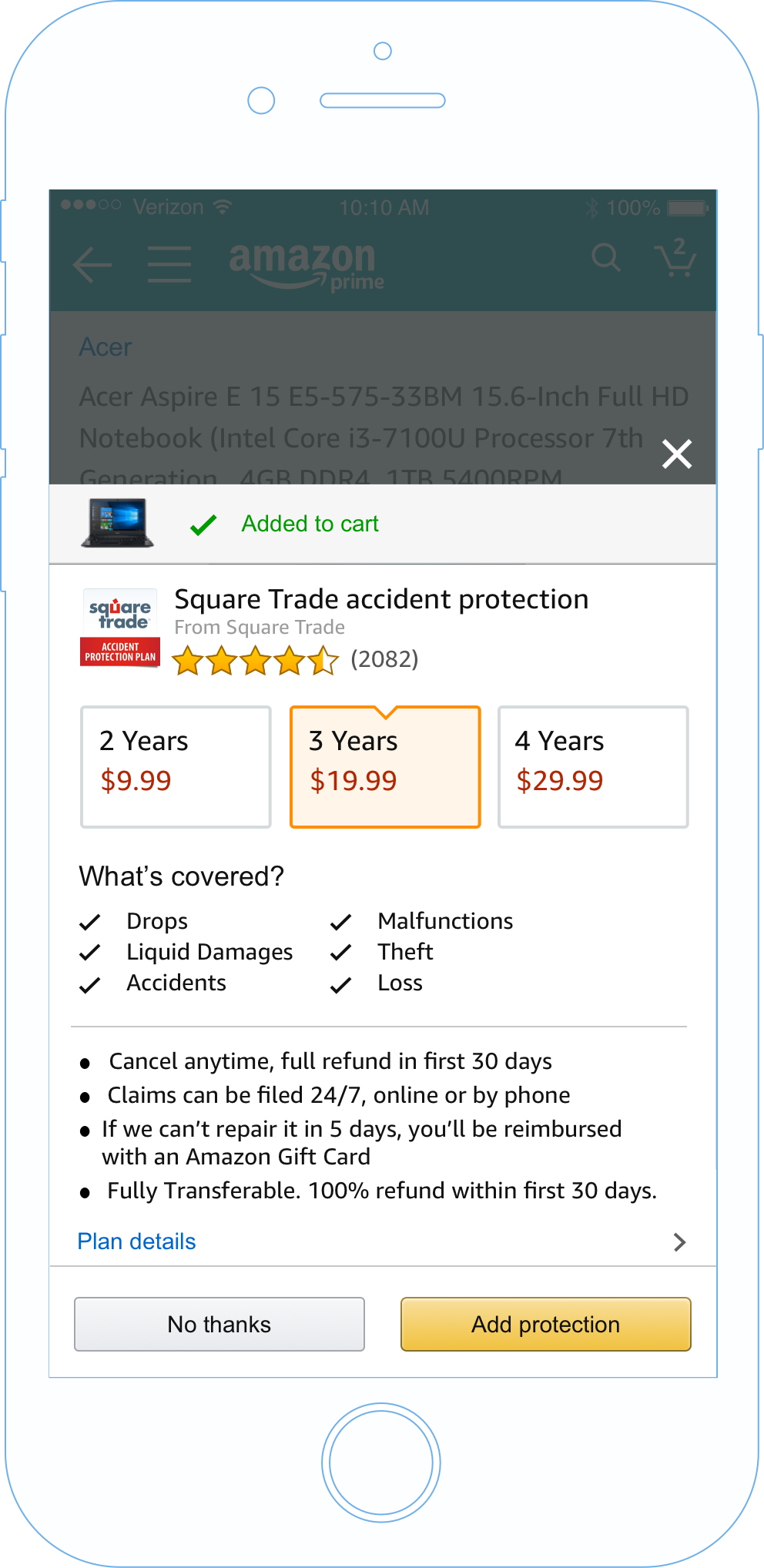
The goal of the project is to offer a mix of protection plans (terms & plans) that will help customers compare and find a plan that meets their needs.
My Role
I coordinated and led all phases of design including: information architecture, user task flows, interaction, visual, product, and prototyping. I also conducted user research using methods such as user interviews, surveys, focus groups, and performed user testing on usertesting.com.Customer Problem
Today customers are recommended one specific type of protection plan, with one duration time (Example: three years of coverage). There were no convenient paths for customers to research and compare protection plans.
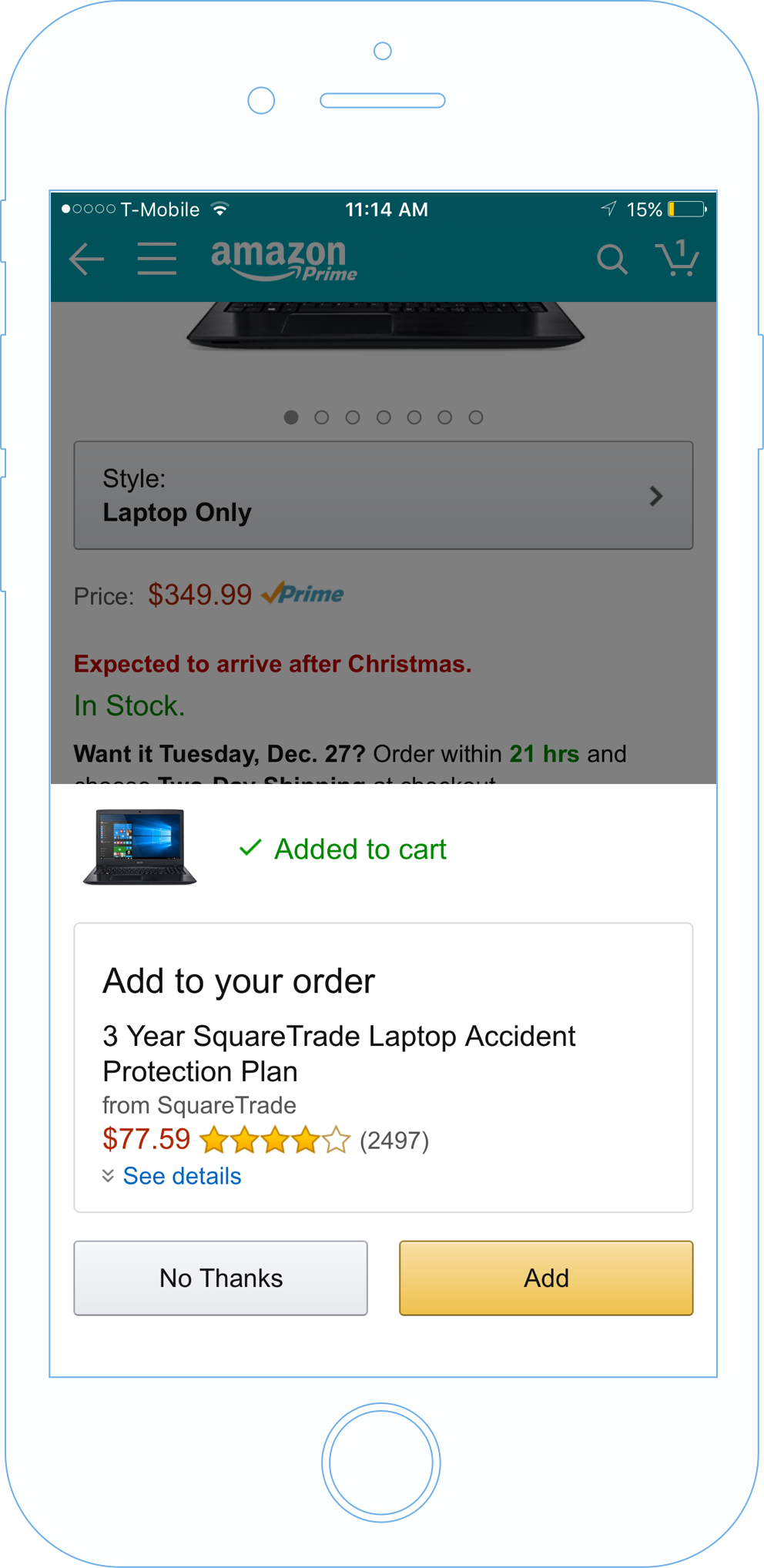
Design Approach
I started to gather information about the current warranty experience by running a survey of target users. After sifting through all of their feature requests, we were able to identify their key pain points:
- We did not offer our customers different options (plan & term) for warranty. So customers were forced to buy the warranty that was offered. Customers wanted different options to compare features & price before buying.
- Participants were wary of protection plans and a few mentioned being disappointed in the past, when problems occurred that their plan did not cover.
Key Features
- Offering a mix of protection plans (terms & plans) will help customers compare and find a plan that meets their needs.
- Displaying clear and detailed information about protection plans including what will be covered and what will not be covered will help build customer confidence.
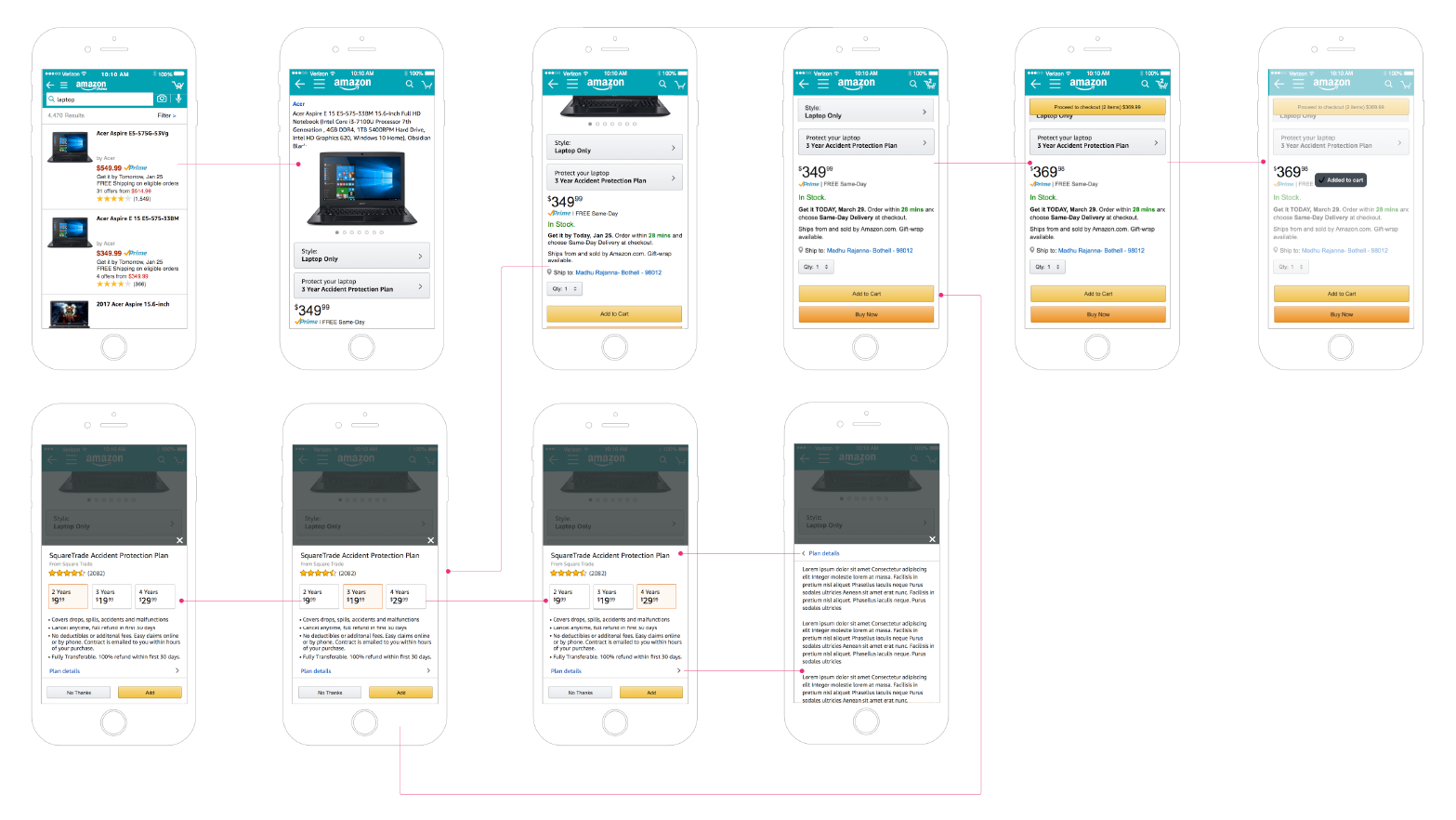
We identified the key features that had to be included in the current warranty feature to improve customer experience, then mapped out user flows, based, and brainstormed a variety of ideas by white boarding. Based on the user flows and brainstorming session, I designed different variations of the design that left a minimal level of inconvenience accessing relevant information.
Once I had designs, I prototyped them in Invision and tested them on twenty users using usertesting.com and finally delivered the completed designs.
User Flow
Proposed Experience