
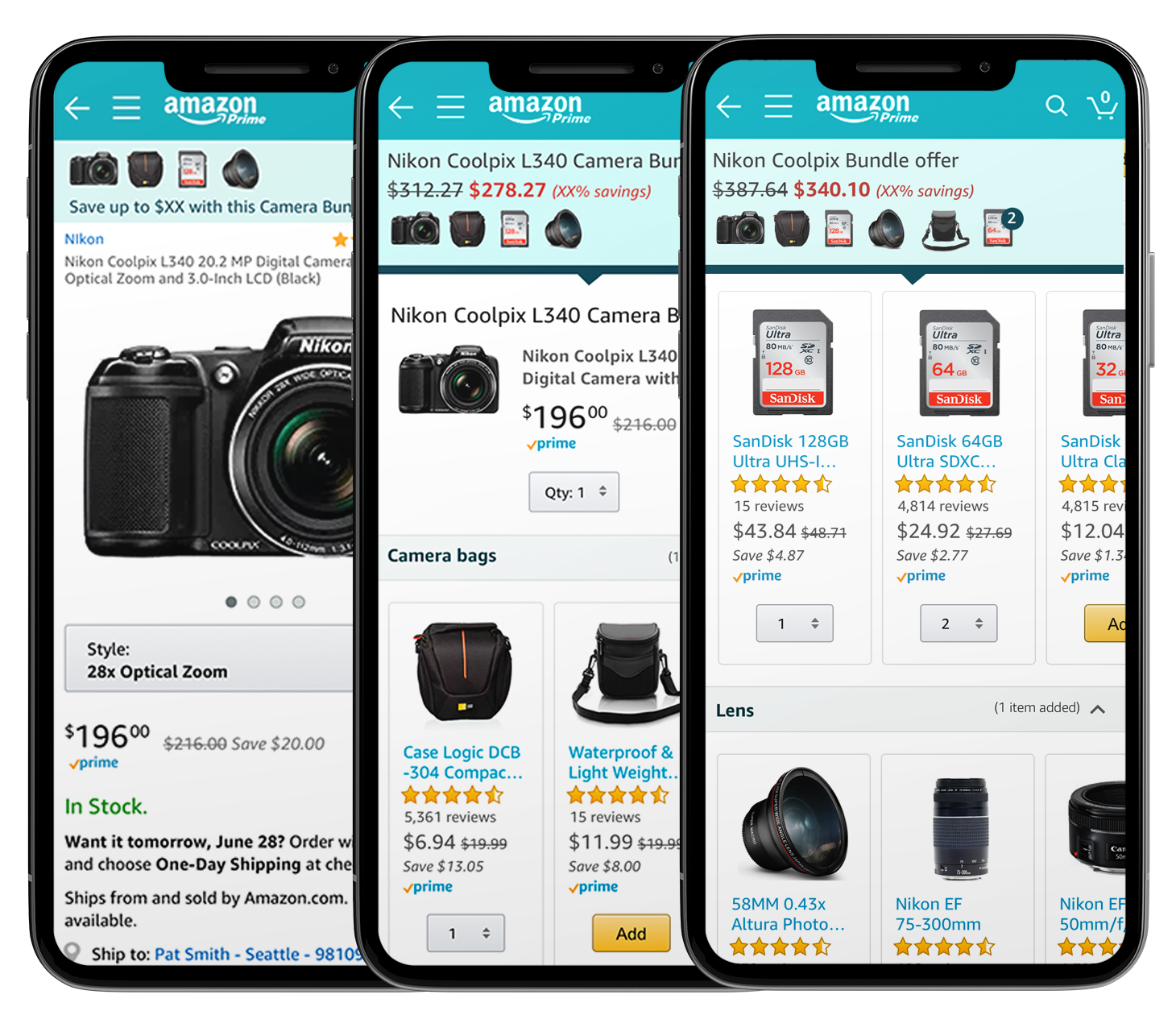
Designed a custom bundling experience on Amazon.com helping customers to choose from a curated set of compatible products.
Project Overview
To enable customers to choose from a curated set of compatible and complimentary items through an easy-to-navigate interface.
My Role
I coordinated and led all phases of design including: information architecture, user task flows, interaction, visual, product, and prototyping. I also conducted user research using methods such as user interviews, surveys, focus groups, and ran user testing on usertesting.com.Customer Problem
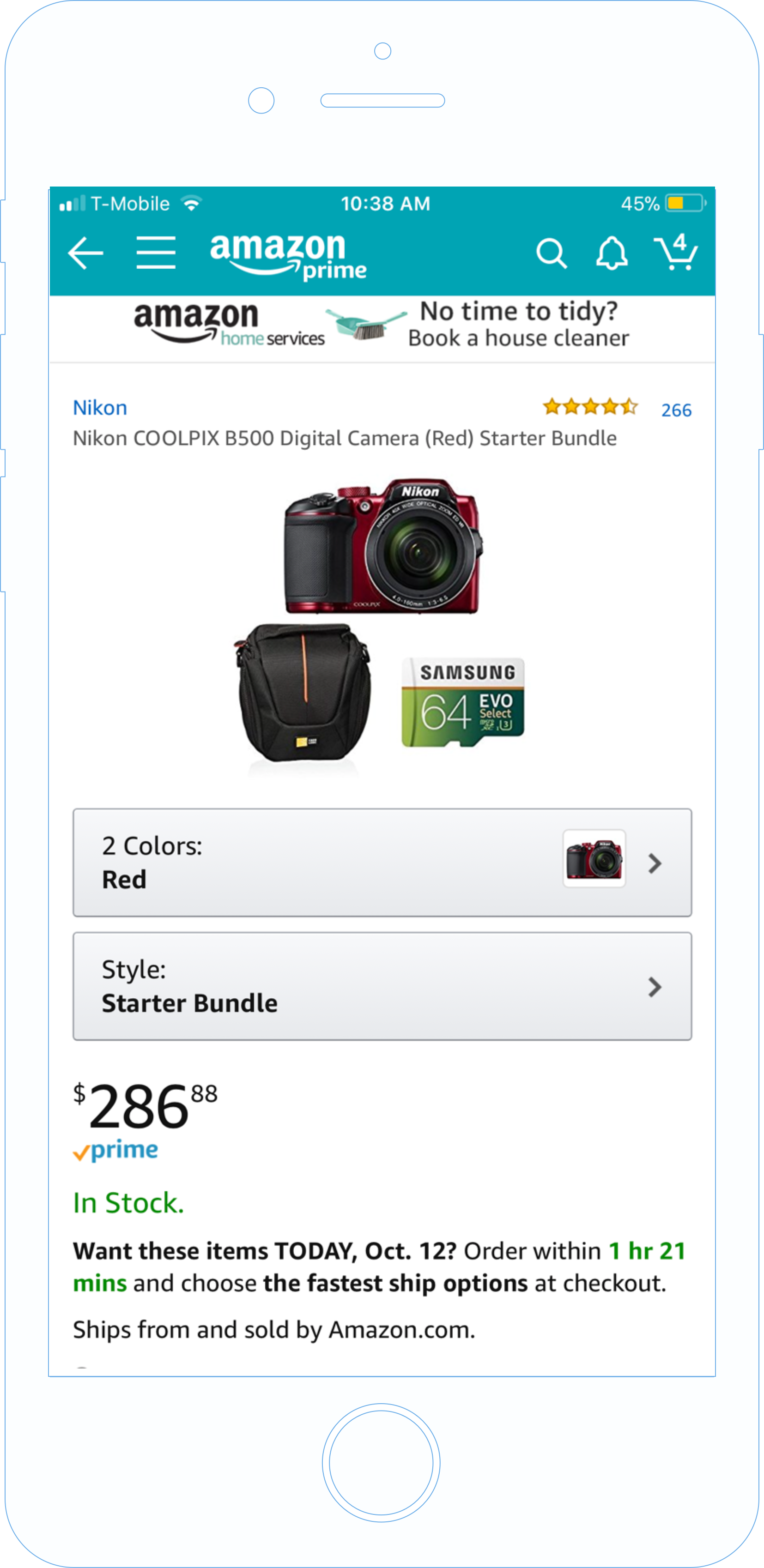
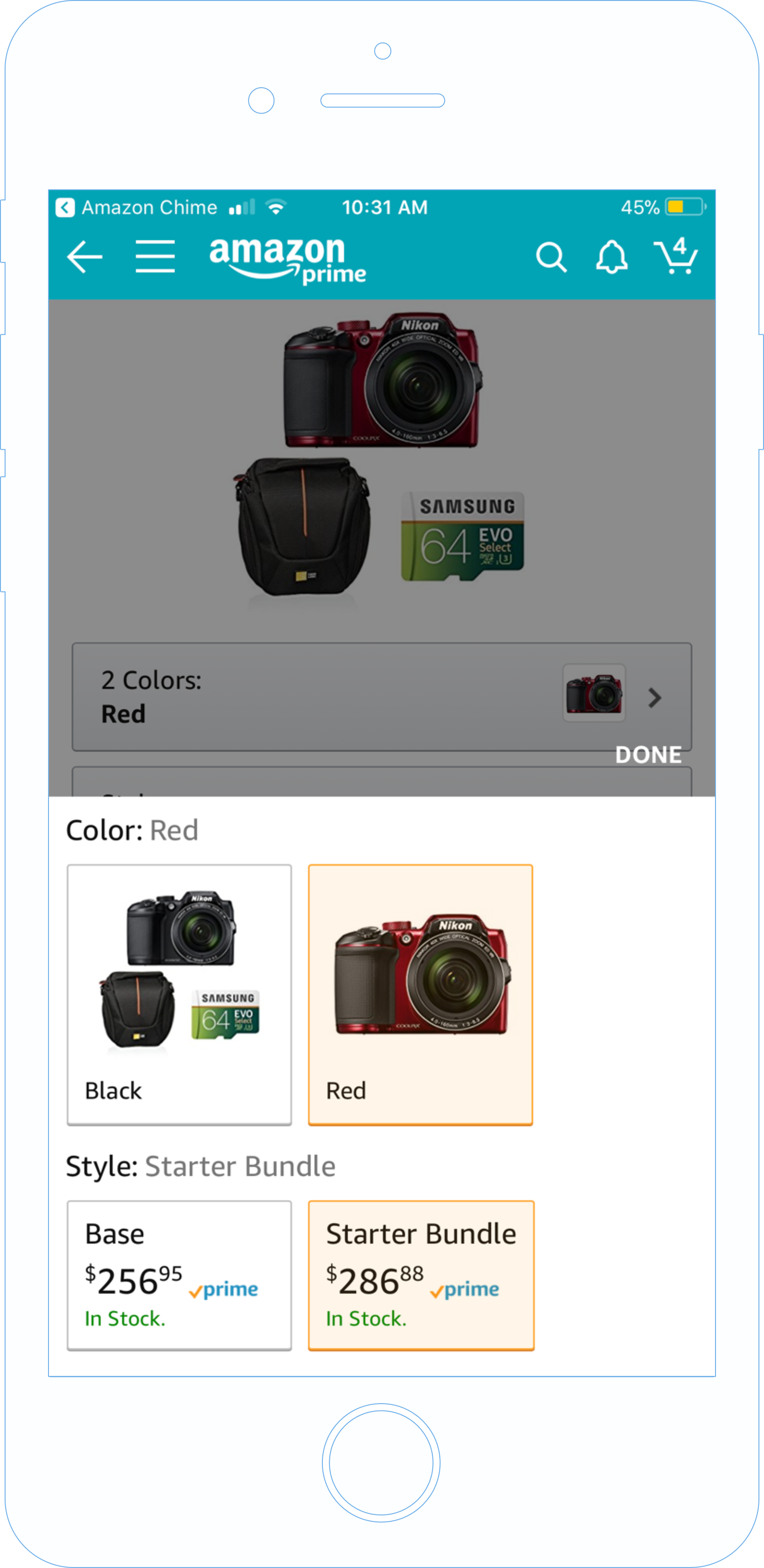
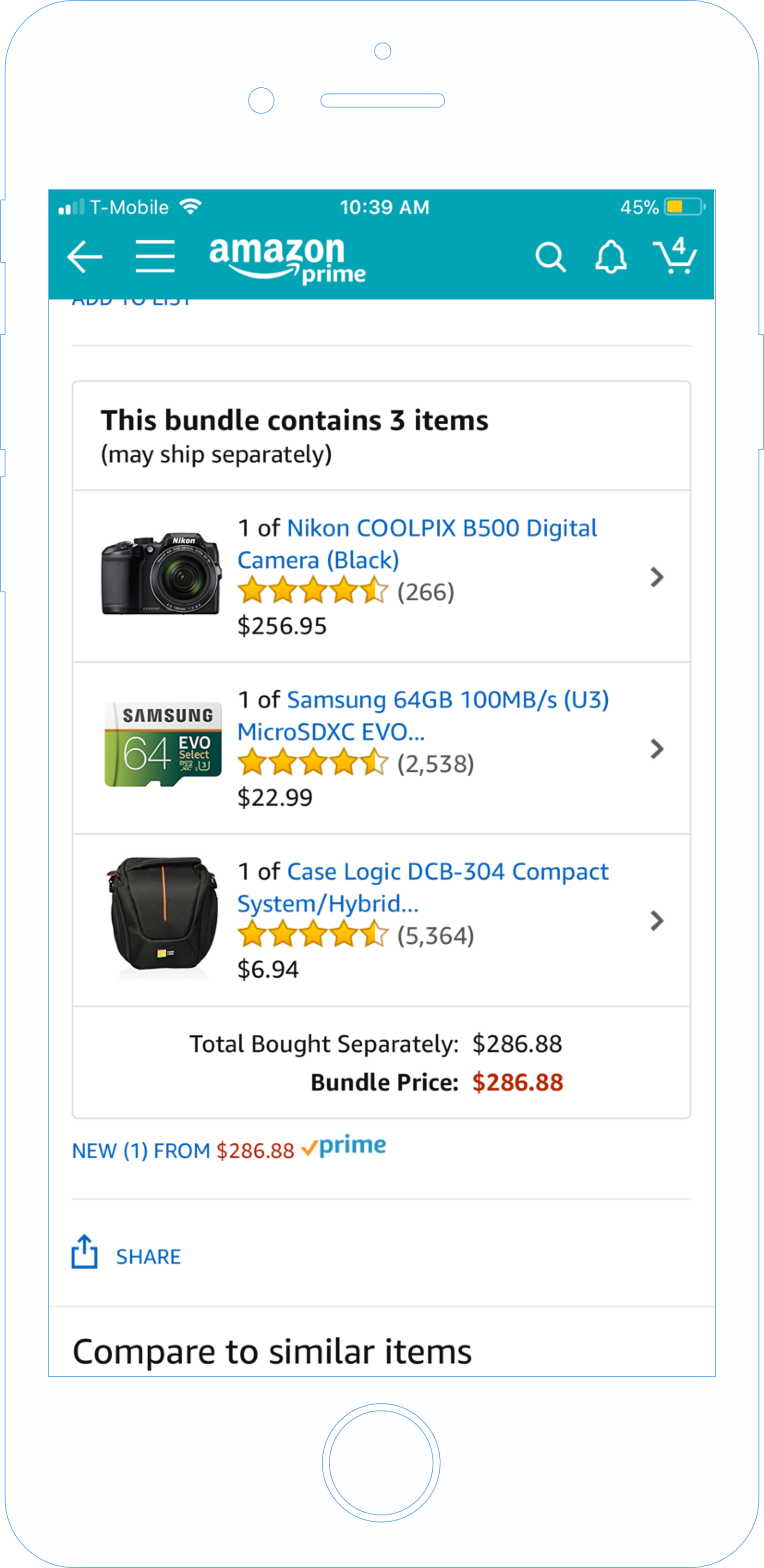
A customer shopping on Amazon who interacts with a virtual bundle, will typically discover it via the twister section on the detail page. Space above the fold is limited and too many twisters can create a confusing and overwhelming CX. Additionally, virtual bundles present the customer with a specific ASIN set for purchase, but do not allow them to make substitutions or changes.
These limitations make it difficult to present customers with a wide selection of ancillary product options to complement their primary purchase.
Design Approach
I started with gathering information of the program by reading the Business requirement, browsing through the current flow, conducting in-depth interviews with the business group and engineering team. Later, I did a competitive analysis to gain a better understanding of other cards in the market.
Competitive Analysis
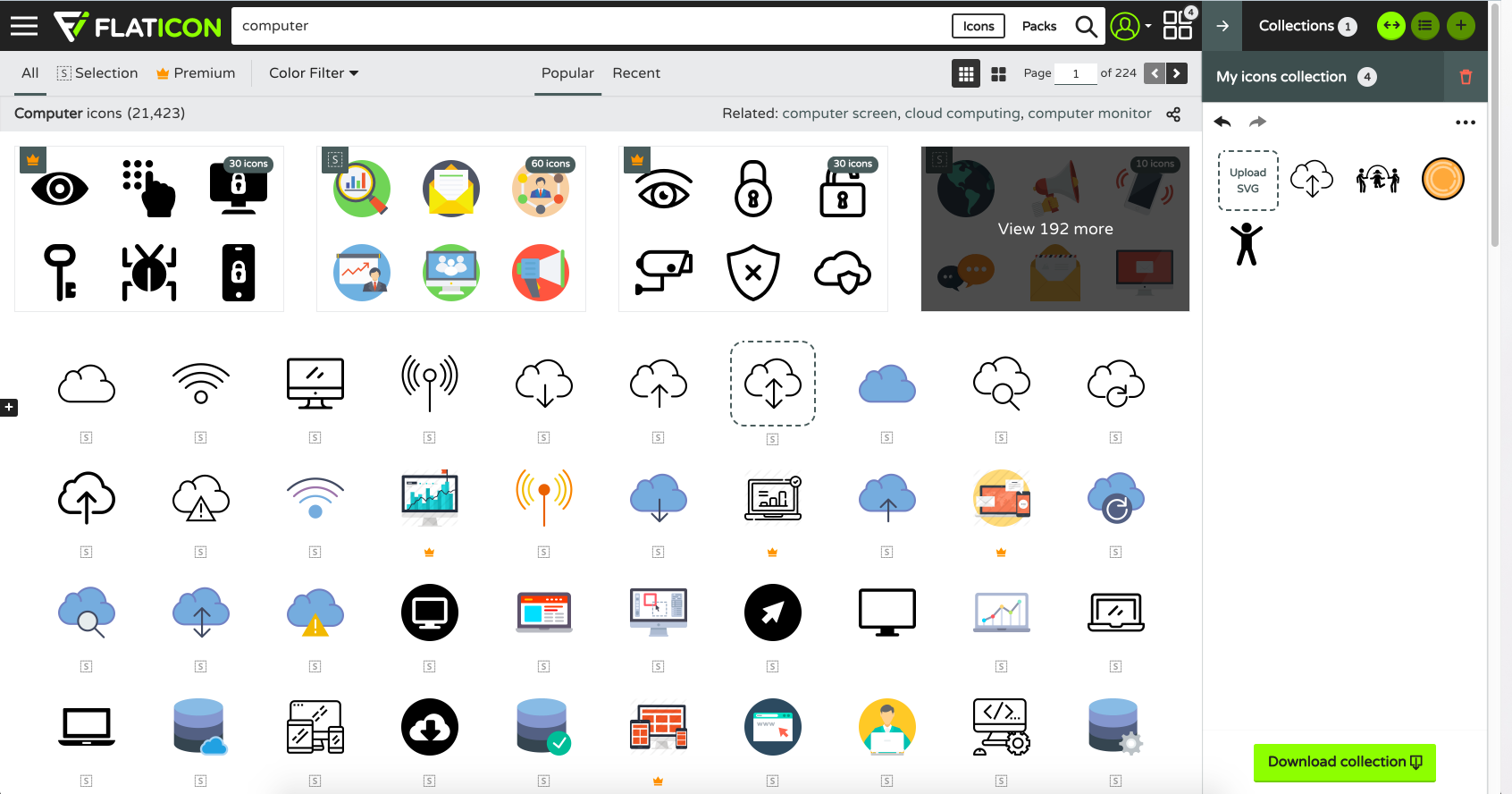
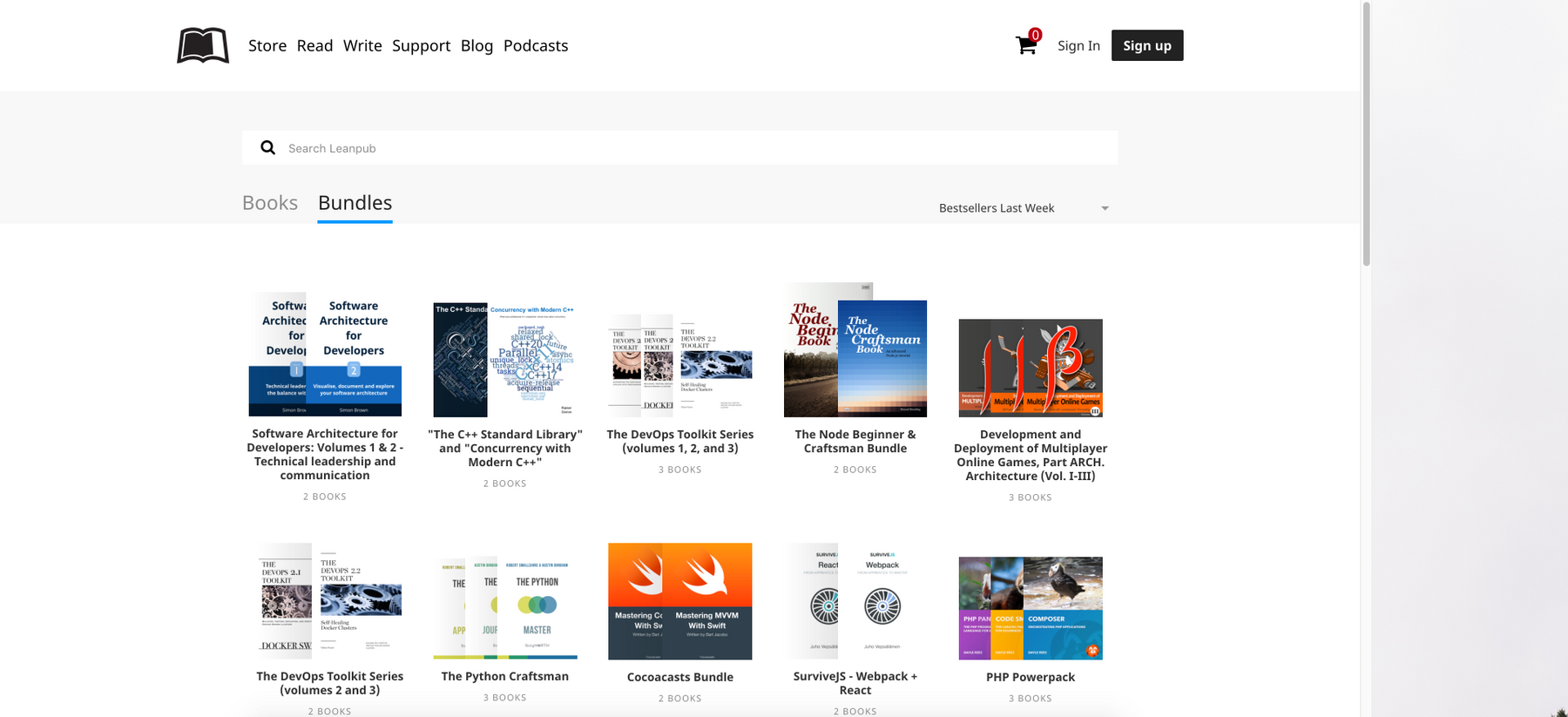
I wanted to find out if there were any similar solutions already in existence, so I started with a competitive analysis. This activity helped me gain incite, while also exploring different ideas.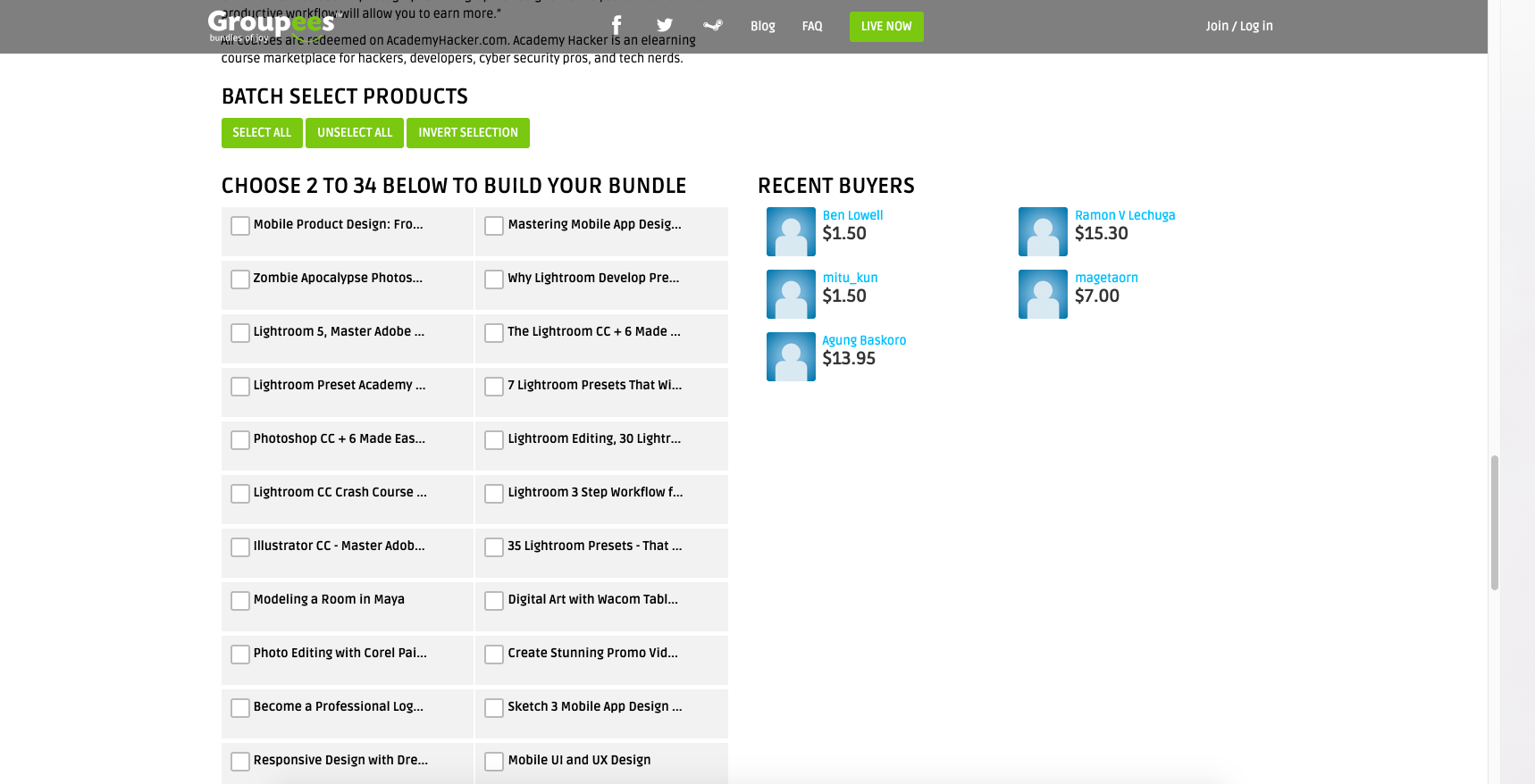
Design Jam
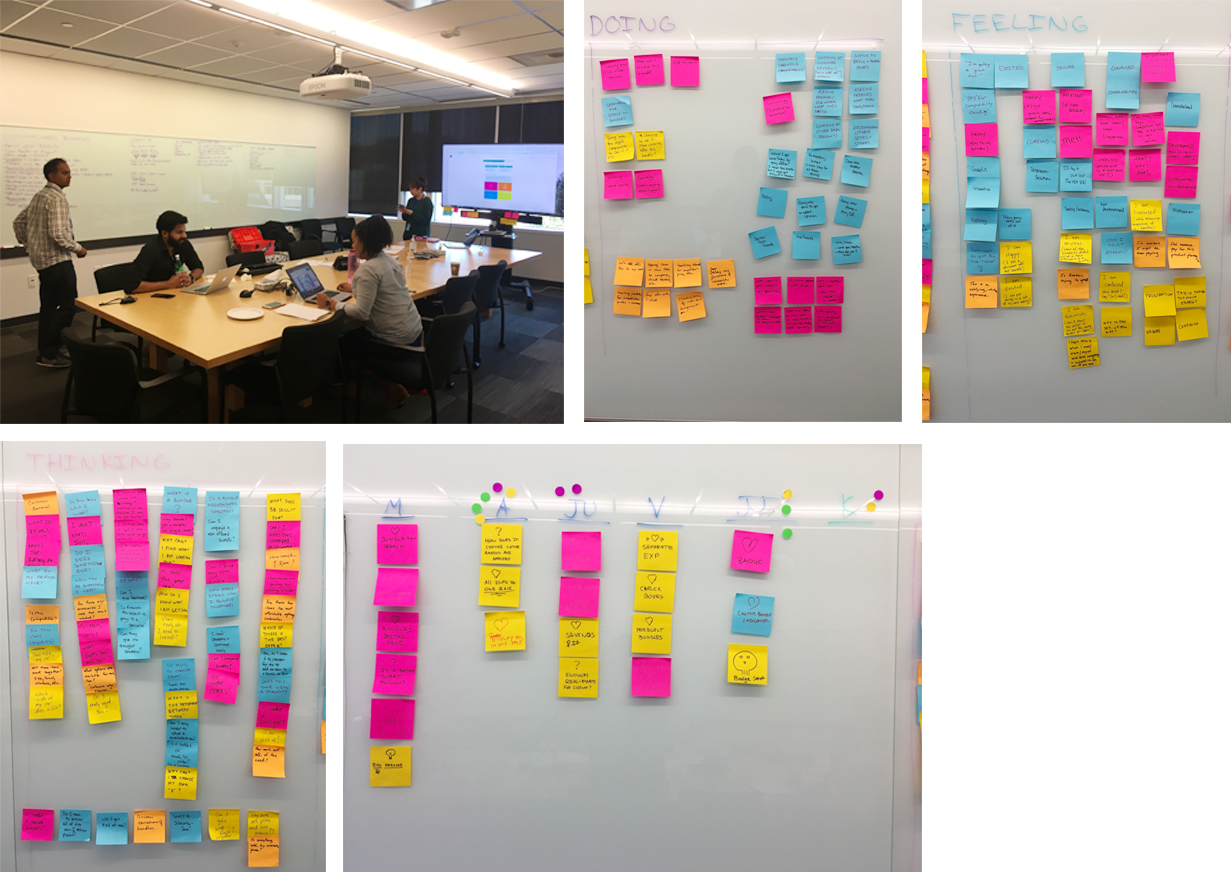
I took these details and conducted a three hour “Design Jam” which included a team of Designers, Business and Marketing professionals . I started with a quick introduction, followed by a brain dump of the project by the Product Manager. I then facilitated a thinking, feeling, doing exercise, followed by each team ideating for each scenario.
The outcome of this session includes:
- Deep understanding of the problem space
- Insight into how customers feel about custom bundles
- Alignment on project definition, scope and solutions
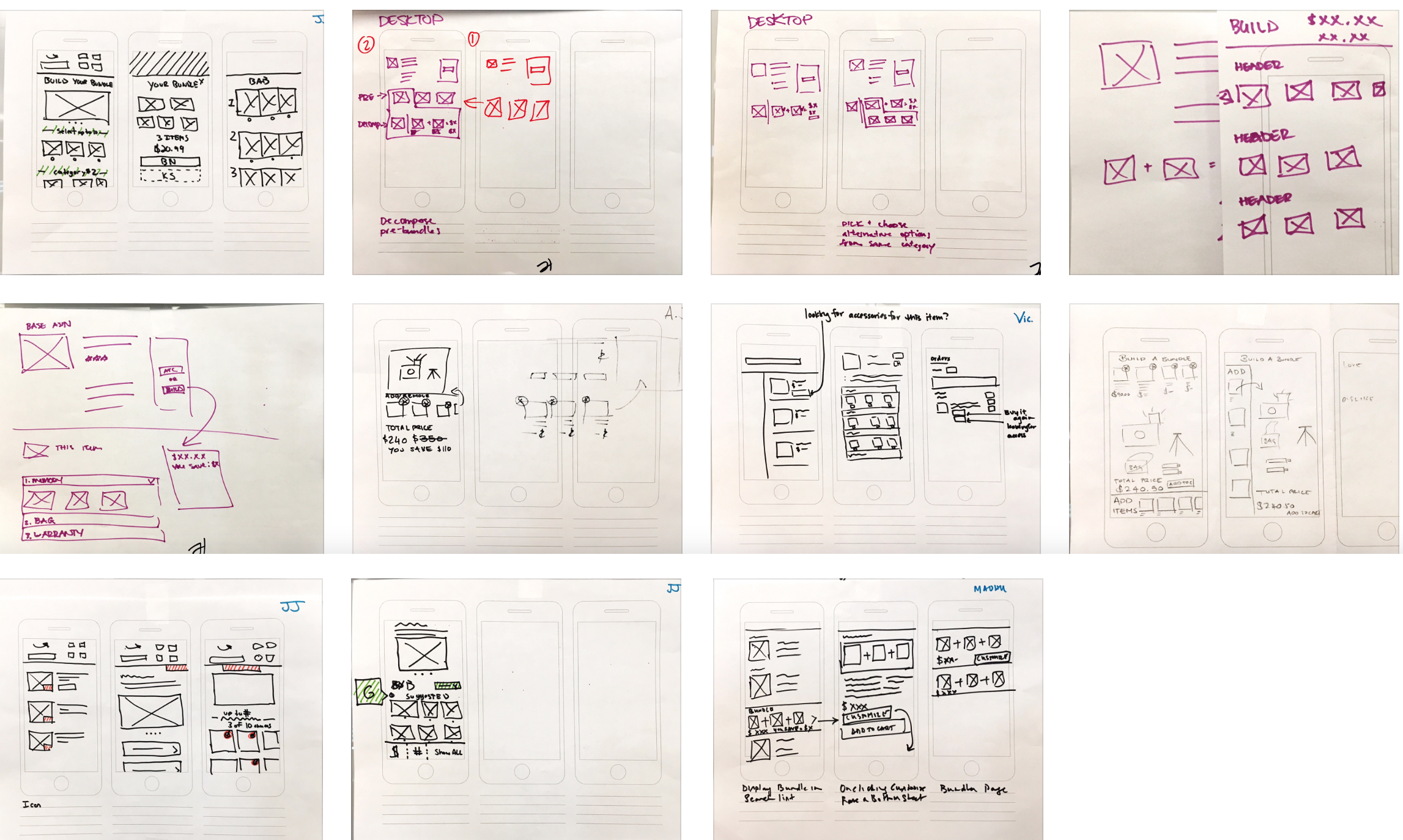
- Ideation and sketches
- A clear understanding of next steps and future progress
Ideation
Design & User Testing
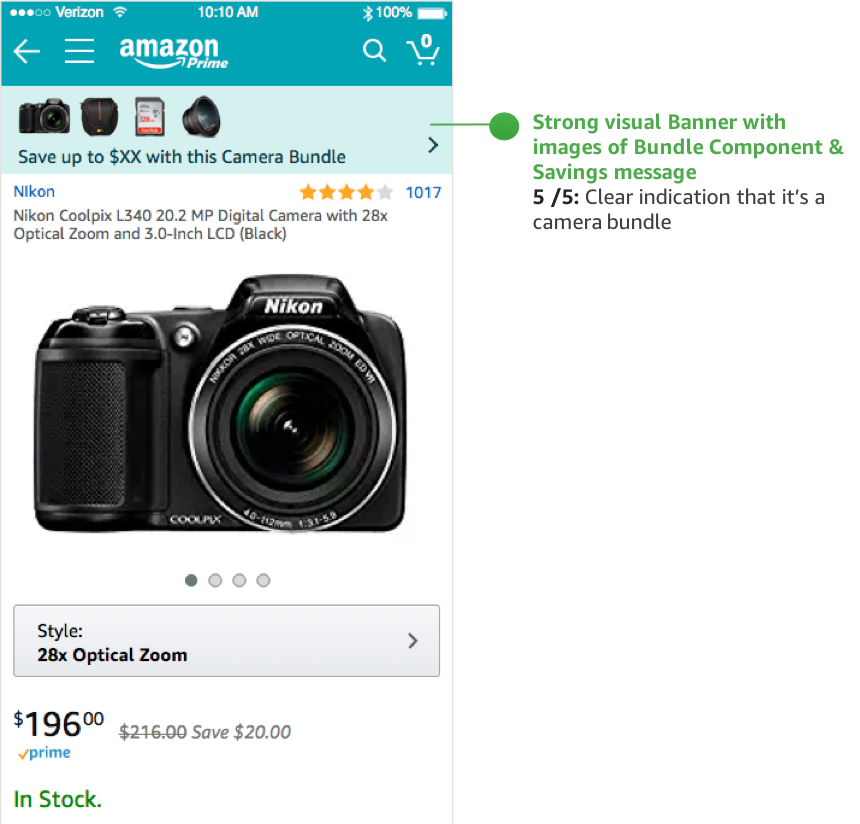
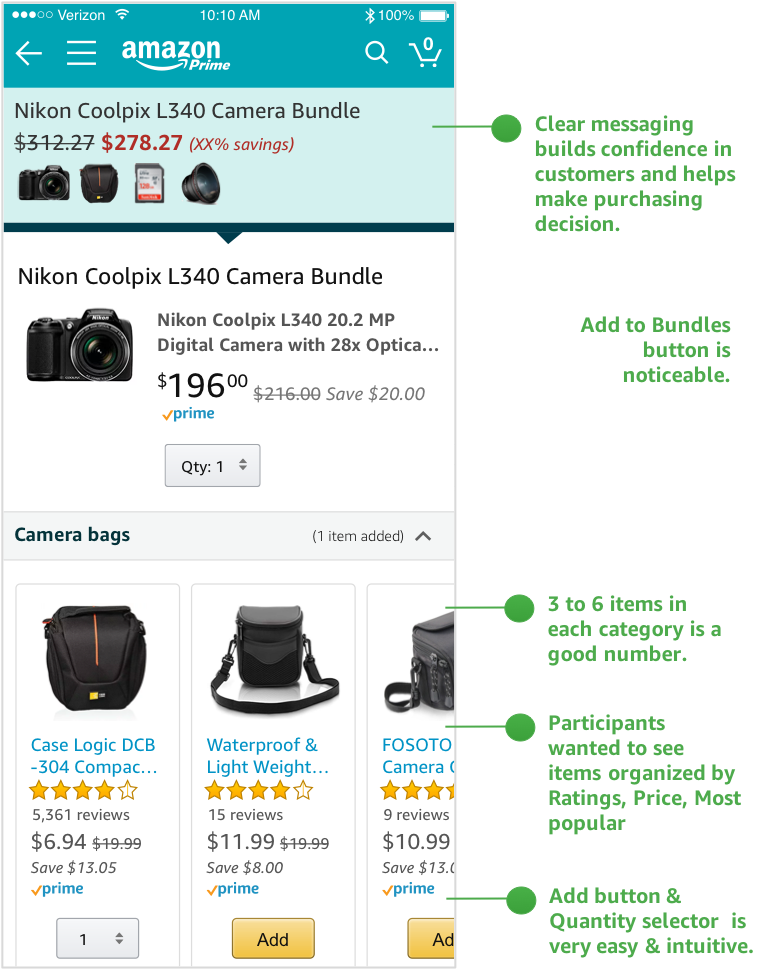
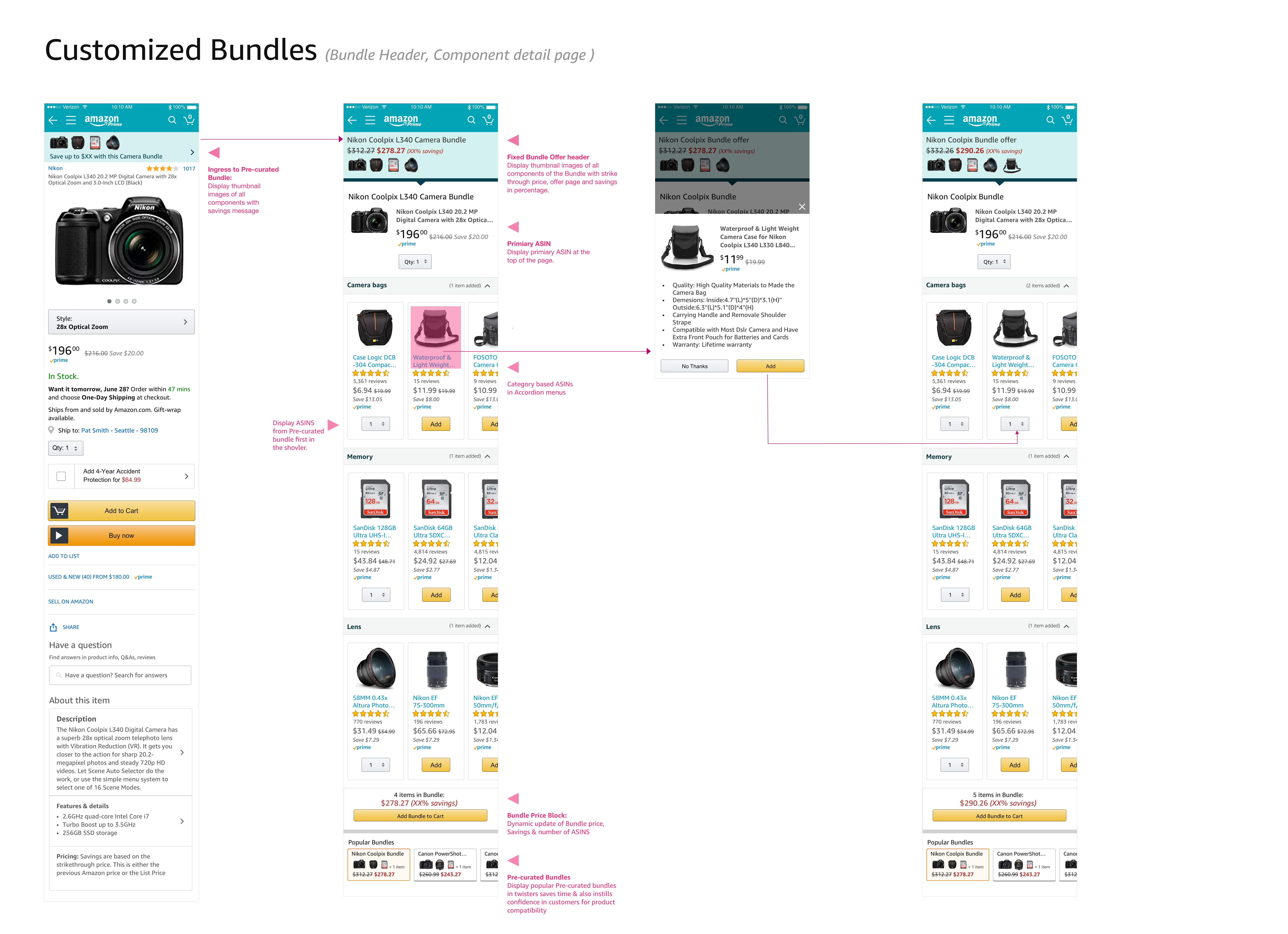
After the Design Jam, the ideas and sketches were validated against our business requirements along with the product manager and engineering team. The outcome of this session was the availability of prioritized features and I was prepared to begin wireframes. I started the design in a collaborative manner by holding whiteboard sessions and translating them into low-fi wireframes. I presented different explorations to the team and then tested the designs on usertesting.com with actual users. Based on the testing, I presented key recommendations to the team and received approval . From there, I started creating the mockups and finally delivered the final designs to the development team.A few of those images are presented below.
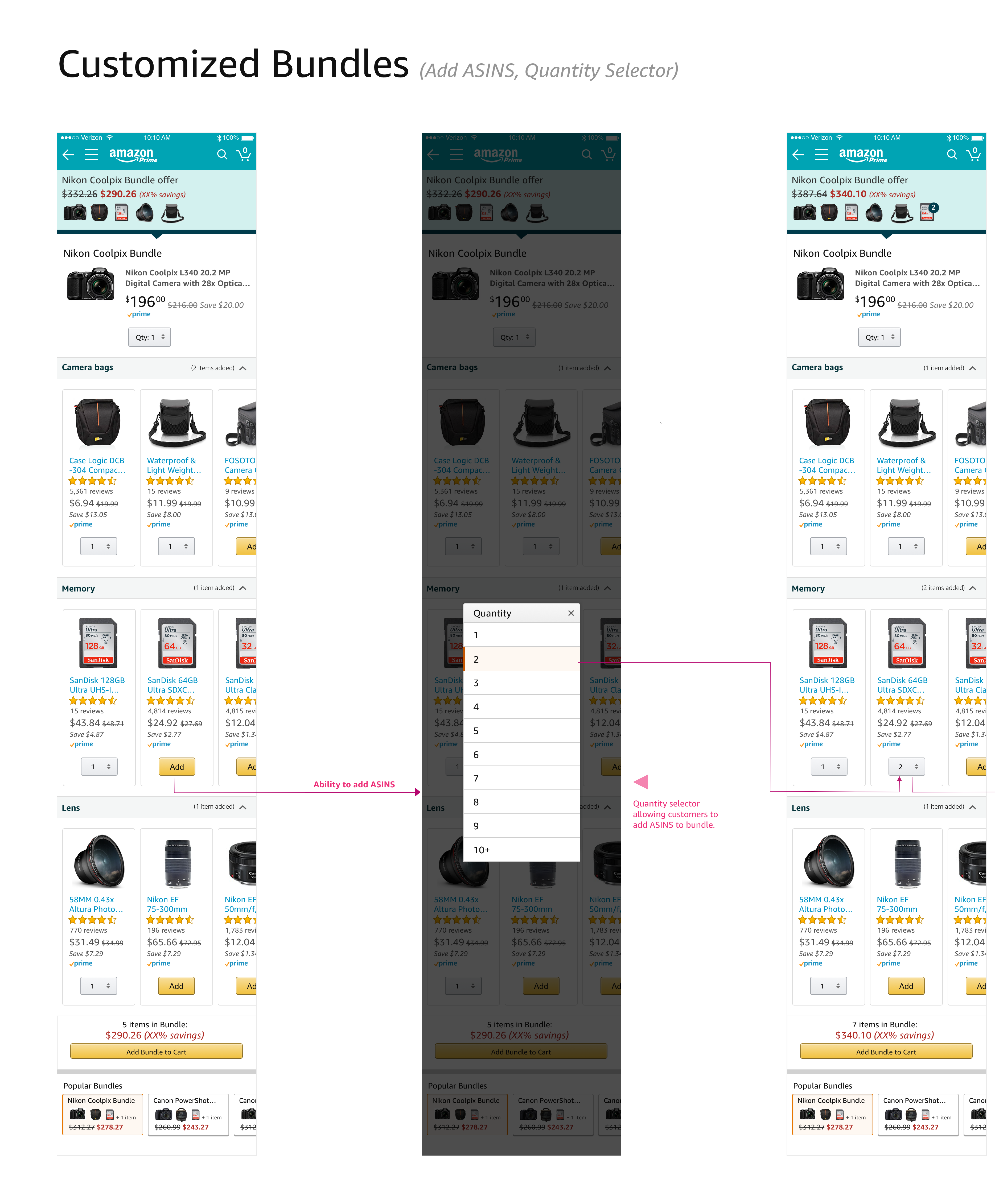
Prototype
Outcome of user test
- Customers considered purchasing a product bundle when offered a predefined bundles with the ability to customize..
- Participants liked the idea of buying bundles only if cost savings were offered.
- Bundled components were offered that are highly complementary by enhancing the use of items in the bundle or providing convenience to the customer by purchasing them together.
- Customers were provided with a way to browse and shop by the category of products.